Programming plants with light,
from seed to harvest.
Uneven emergence is where a season is quietly lost. Chromavia primes seed with precisely controlled light, so a seed lot comes up faster and more evenly, from a treatment applied dry, before the seed ever enters the soil.
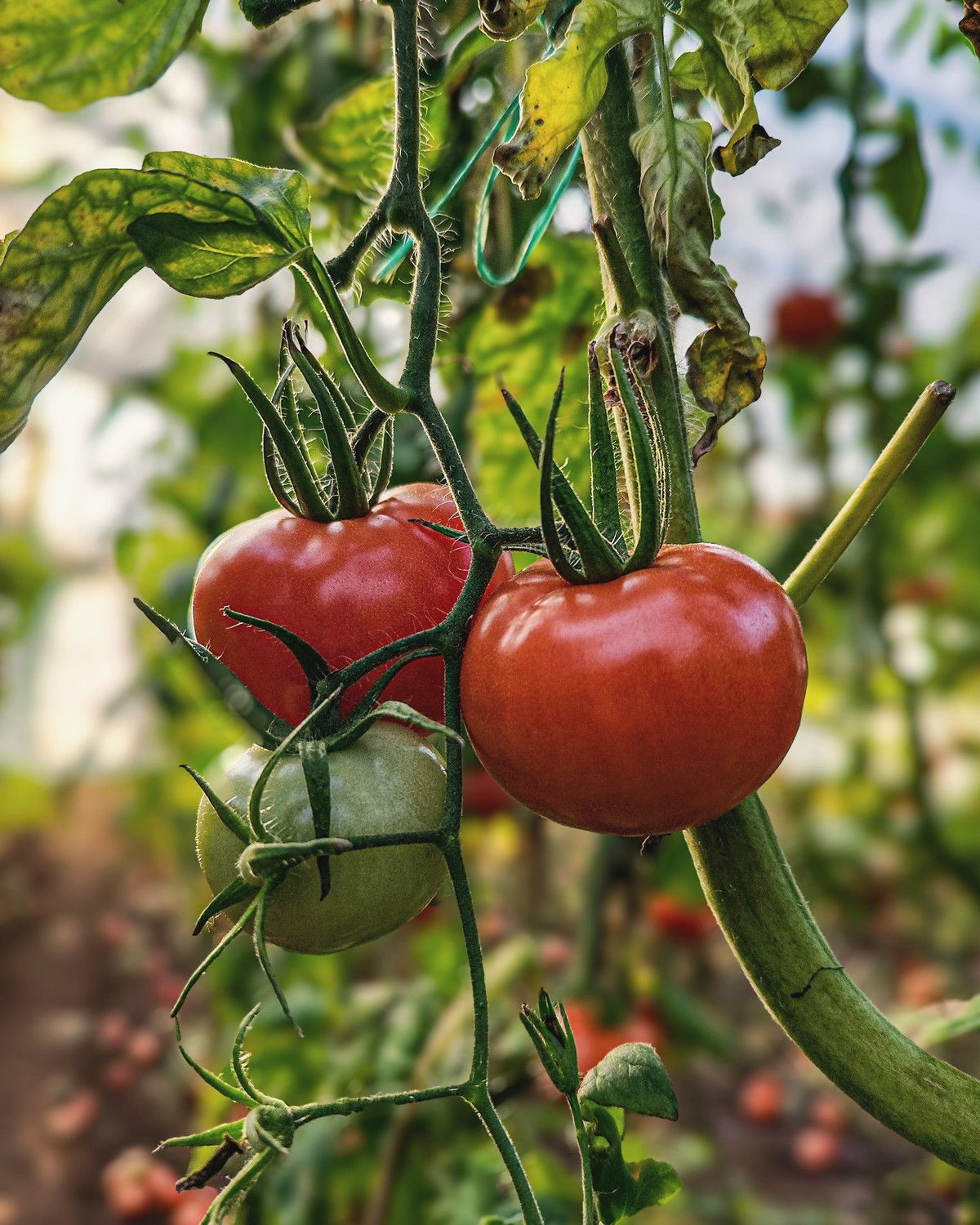
In trial with
Technology
Light-controlled epigenetics.
No sprays. No gene editing. Fully organic-compatible. We use precisely controlled light to safely switch on traits a plant already carries within its DNA.
Dormant
seed
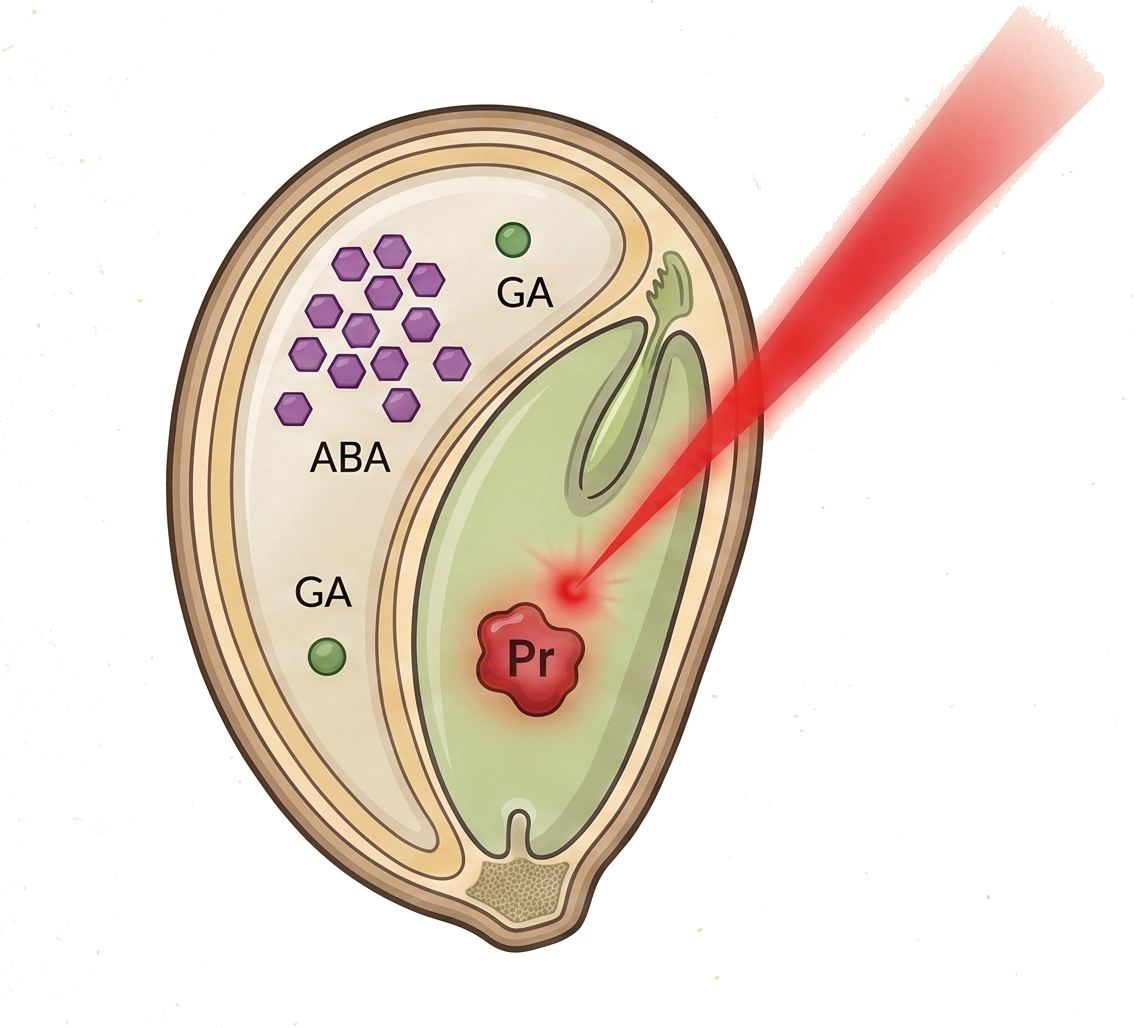
Laser activation
of hormonal shift
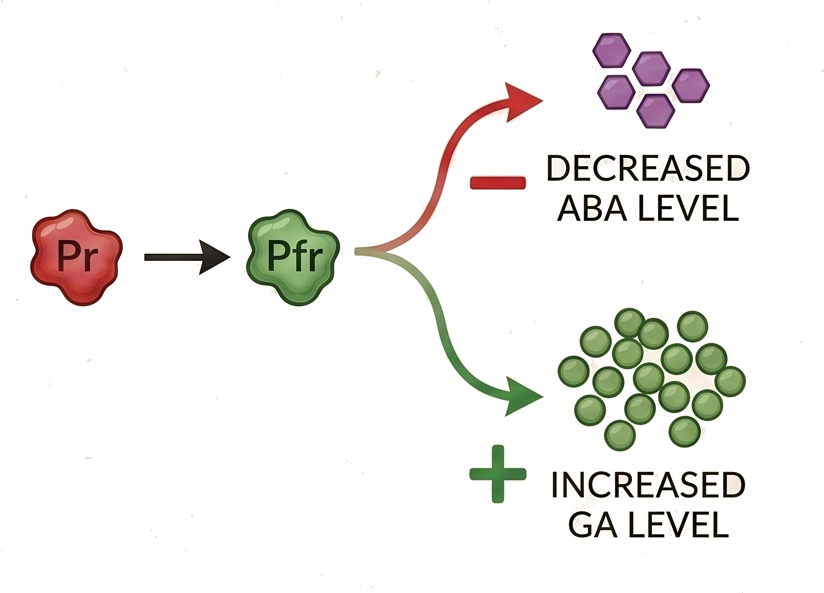
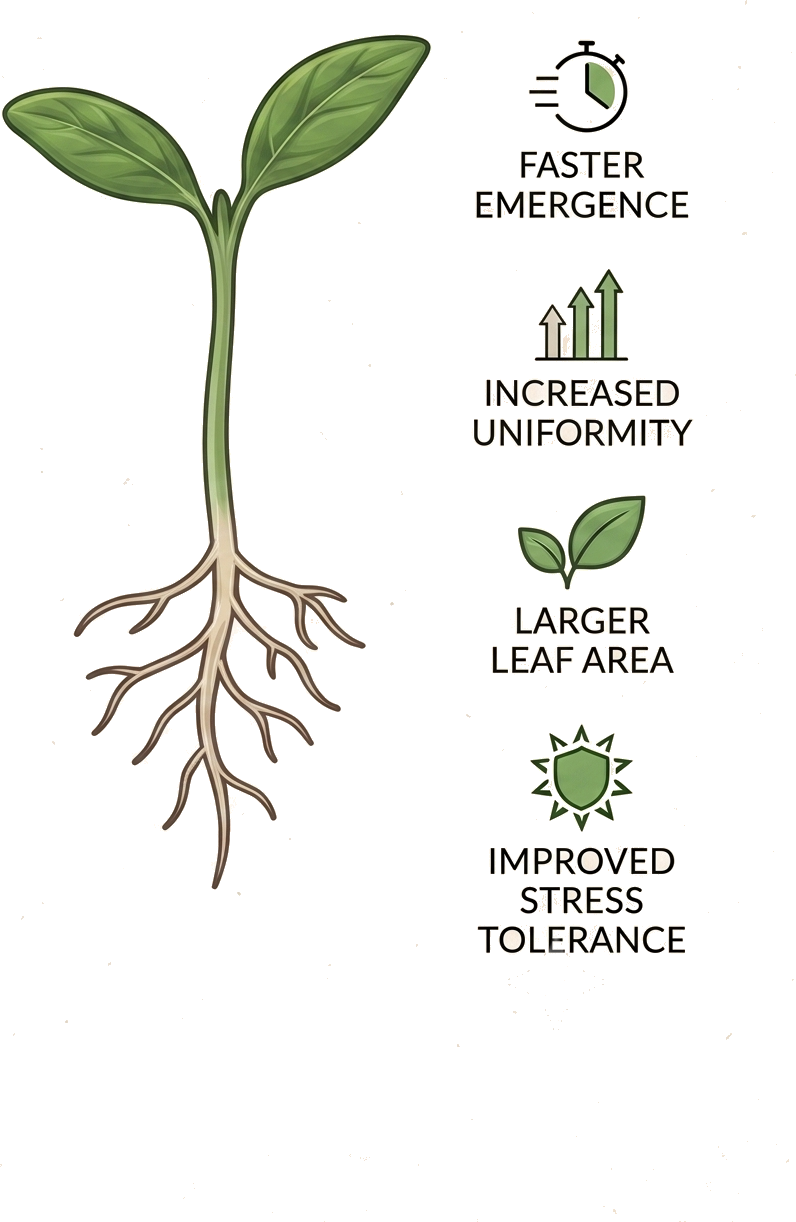
Boosted germination
and vigour
Organic first.
Organic growers are the most under-served: synthetic chemicals and gene editing are both off the table. Light is neither. It adds no substance, edits no genome, and is not ionising radiation. Photonic priming also performs at its peak in exactly the tough, open-field conditions organic growers face, where a thin stand cannot be rescued with a spray. It earns its keep fastest on high-value crops, where seed is expensive and independent estimates put a single re-seeding event at $50–200 a hectare.
Why not the other two
Conventional methods
Chemical priming. Regulated, leaves residue, and closed to organic growers.
Transgenics
Genetic modification. Edits the genome, and stays blocked in organic and much of the EU.
Chromavia
Photonic priming
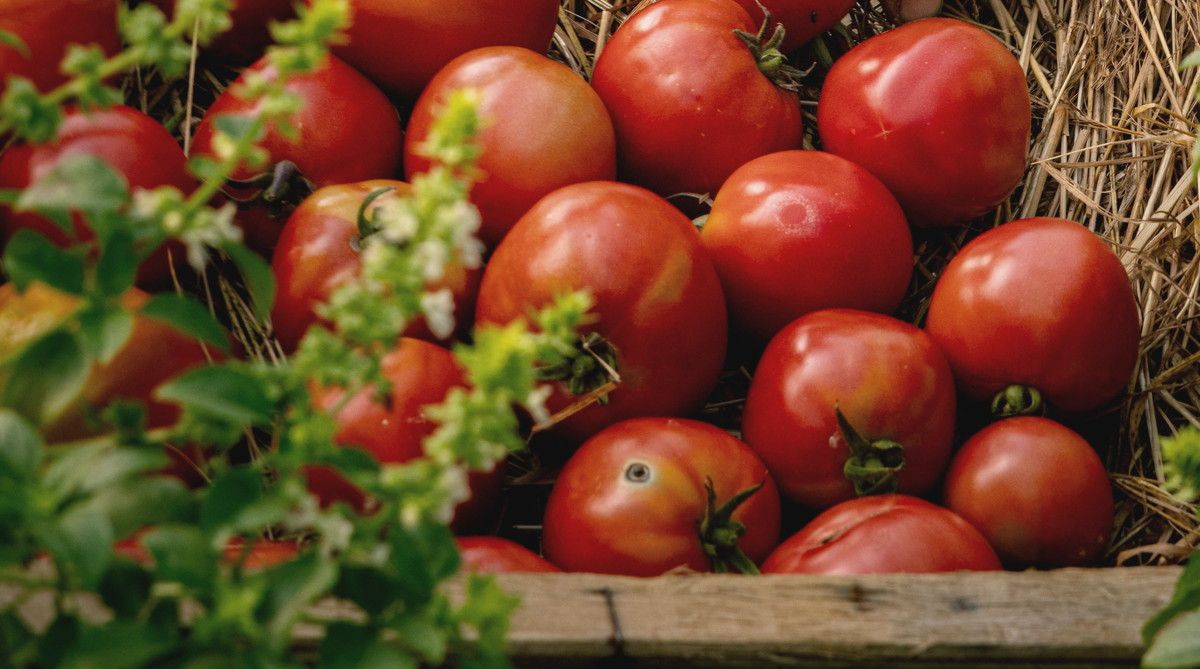
Light only, tuned to the photoreceptors the plant already uses to read its environment. Applied dry, before the seed ever reaches the grower: nothing added, nothing left behind.
Platform
A control layer for
plant biochemistry.
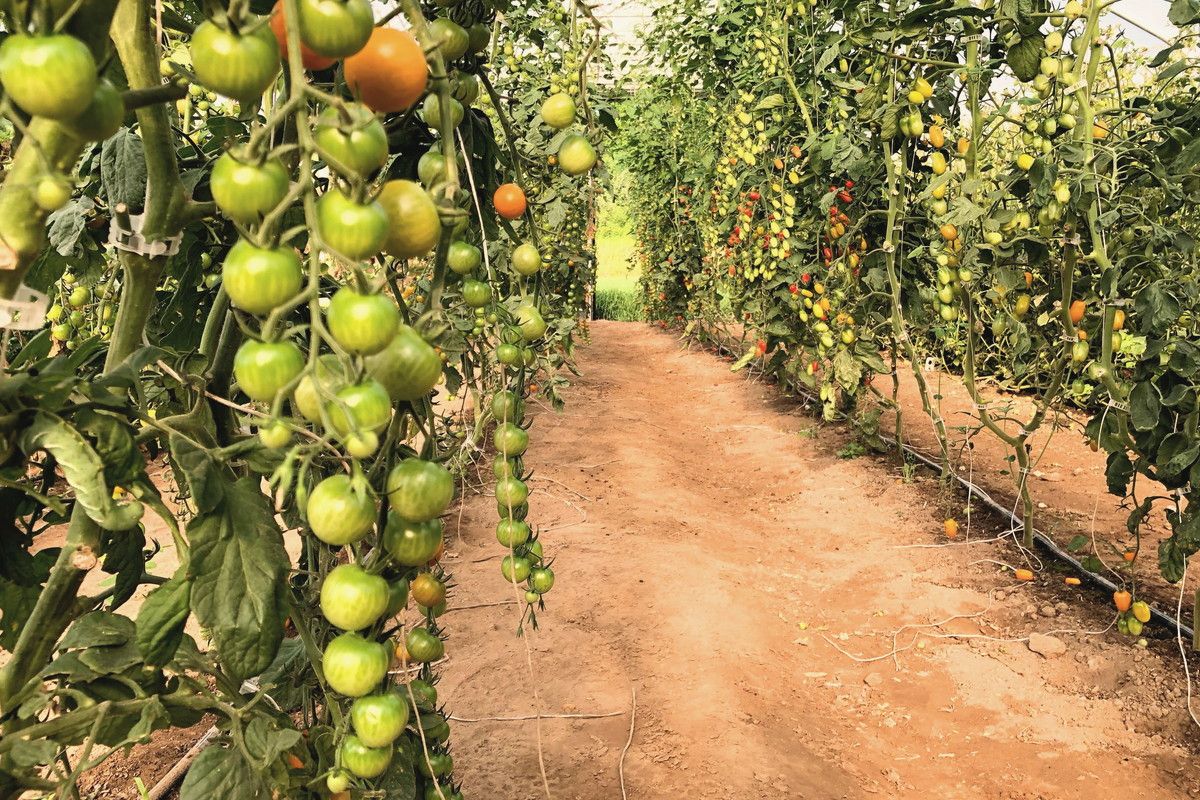
One biology-informed light treatment, delivered with photonic precision, and a platform that reaches across the crop cycle. Three stages, one before sowing and two still ahead of us, each acting on the same three levers.
Before sowing
Prime
Available soon
A seed lot treated before germination emerges faster and more uniformly and establishes a better stand. Applied dry, so it drops into an existing seed-processing workflow.
In the field
Sense
In development
Read the plant's state in the field, non-destructively, turning a treatment into a feedback loop instead of waiting for harvest to find out.
In the produce
Control
Early research
Steer secondary-metabolite expression in the final produce, and buffer the plant against abiotic stress.
Every stage acts on all three levers
Vigour
Faster, more uniform emergence, so more of every seed becomes a productive crop.
Resilience
Crops better able to shrug off drought, heat and the stresses of the open field.
Quality
Metabolite control for produce that is denser in nutrients, and better on the palate.
Results
What our priming does
to a crop.
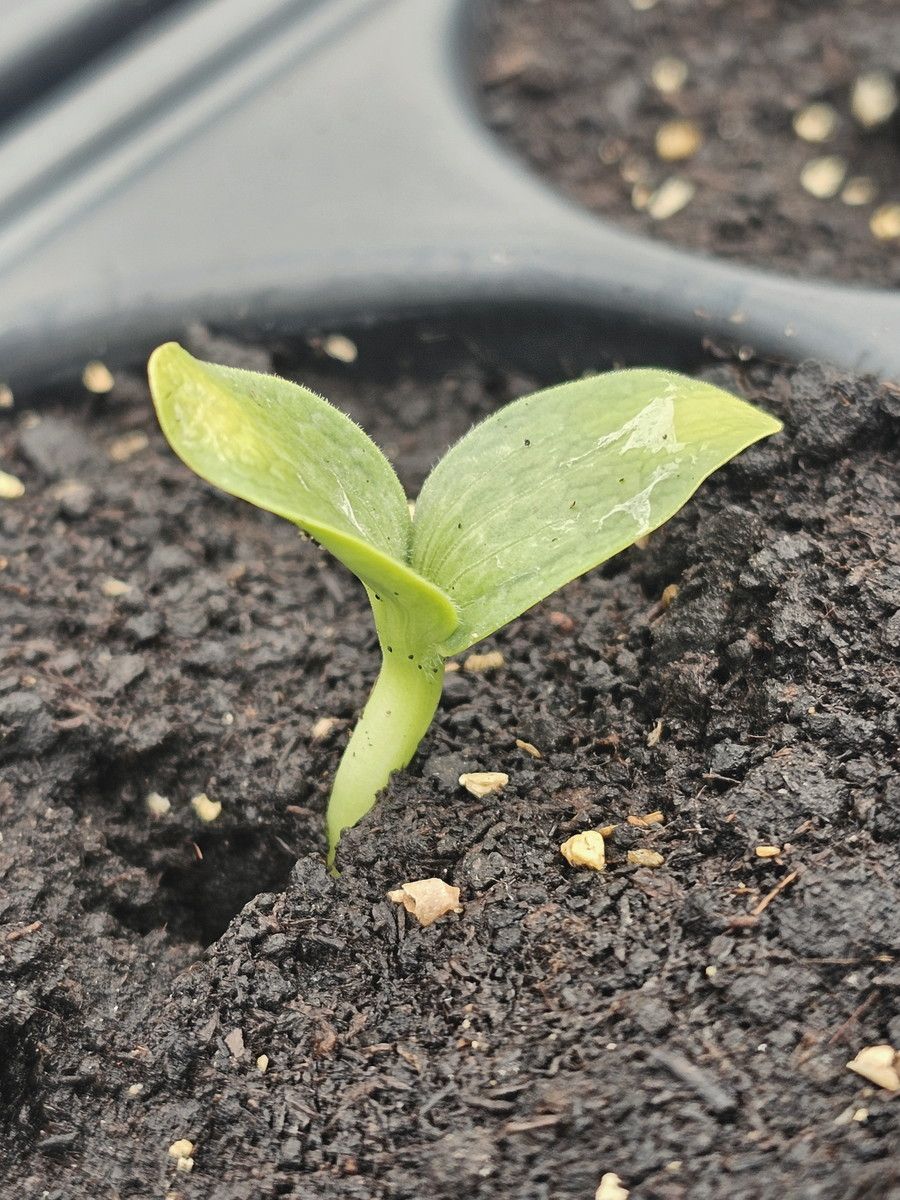
Photonic priming is measured where it matters: at establishment, the stage that sets the ceiling on everything the crop does afterwards. We start with high-value crops, where the cost of a weak stand is highest.
Running now
Open-field trial
An independent open-field trial is under way with Hochschule Geisenheim University in Germany. More readouts follow as the season completes.
Measured at establishment
XX% faster
Provisional
time for half a treated lot to germinate, against an untreated lot
Time to 50% germination
a treated lot reaches the halfway mark sooner, so the stand comes up together
Final germination rate is largely unchanged. Priming acts on how fast and how evenly a lot gets there, not on how many seeds eventually germinate. T50, the time for half the lot to germinate, is the parameter that moves.
+30%
Measured
leaf area at equal age, treated against untreated lots
Seedling leaf area
larger canopy on treated lots at the same age
Leaf area is our stand-in for seedling vigour: more canopy earlier means more light intercepted during establishment, the window that decides whether a seedling survives its first stress event.
XX%
Provisional
share of a treated lot emerging inside one window
Emergence uniformity
a tighter window, so the stand can be managed as one crop stage
A tighter emergence window lets a grower time irrigation, feeding and harvest against one crop stage instead of several. Uneven emergence is costly: independent work puts the yield penalty at 20–22% when half to three-quarters of plants come up late.
Team
We've spent our careers controlling matter
with light.
A decade of hands-on work with lasers, spectroscopy and DNA, and with the light-driven biochemistry that connects the three.
Our research has appeared in Science, Nature Communications, the Journal of the American Chemical Society and Optica, with almost 700 citations and a combined h-index of 20.
Piotr Kabaciński, PhD
Enrico Ridente, PhD
Work with us
The first step is a pilot on your own variety: your seed, treated against your own untreated control, with the readout handed back whether it works or not. Or find us at one of the events below.
EU AgRI 2040 · Brussels
Belgium
The European Commission's
EU AgRI 2040 Conference,
Brussels, Belgium.